

Course information
Description and objectives
The course aims to inspire educators to use tools for teaching futures thinking, tailored to their areas of specialization. The training has been developed to equip educators with futures thinking strategies that can be used to integrate these competencies into their teaching. The ultimate goal is to educate and empower students to drive sustainable transformation.
Target group
The training is aimed at educators in business schools who are interested in integrating sustainability-focused futures thinking into their teaching. It is designed to suit teachers across all disciplines within business studies.
Intended learning outcomes
Upon completing the training, participants will be able to:
- explain the theoretical foundations of futures thinking competence particularly in the context of sustainability.
- explore and analyze explore and analyze critical perspectives on futures thinking – including feminist and decolonial approaches – and identify implications for diversity, equity, and inclusion.
- demonstrate reflection on own learning about multiple and/or sustainable futures.
- apply practical tools and techniques to develop students’ futures thinking skills in their own area of specialization.
Course content
Participants will gain a foundational understanding of futures thinking competency and its importance in responsible management education. The course emphasizes visioning and imagining multiple futures, and understanding and critically reflecting on the assumptions underlying different futures. It will address pedagogical approaches to integrating sustainability-focused futures thinking into business studies and introduce practical tools for teaching this competency. Participants will explore ways to apply these concepts in their own teaching.
A cross-cutting approach will highlight the ethical dimensions of sustainable futures and maintain a critical awareness of diversity, equity, and inclusion (DEI) in futures thinking throughout the training. Questions of equity, diversity, and inclusion are central to social sustainability—an essential dimension of envisioning sustainable futures, which is the focus of this training. Futurity and change are also central to the effort to build a more diverse and inclusive society.
Course and session structure
The course is structured along five main sessions. It is advisable, but not mandatory, to familiarize oneself with them in the given order:
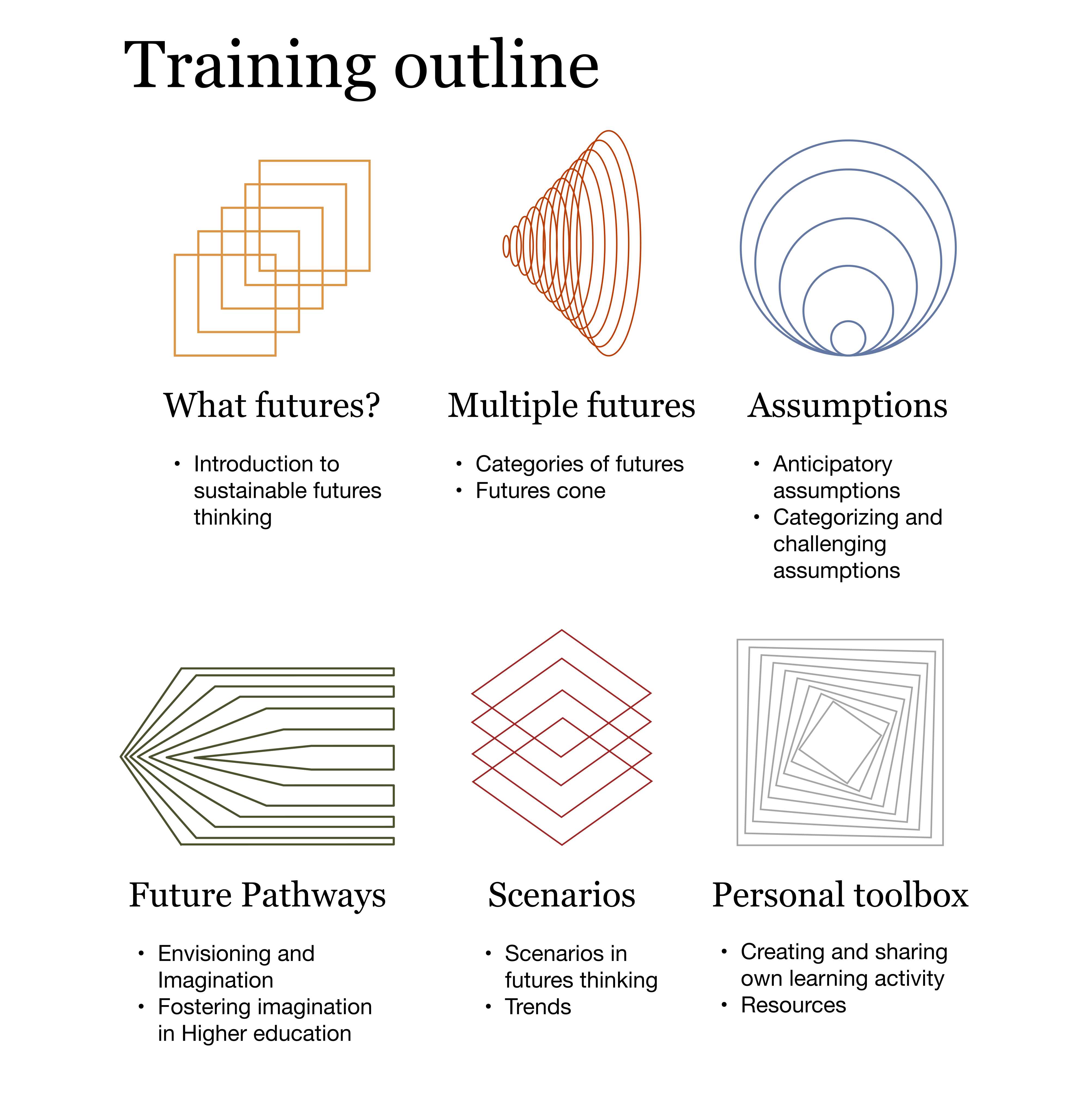
Each session follows a consistent structure that introduces the basics of futures thinking and includes reflection prompts, peer learning, and hands-on exercises with sample learning activities to help participants integrate sustainable futures thinking into their courses.
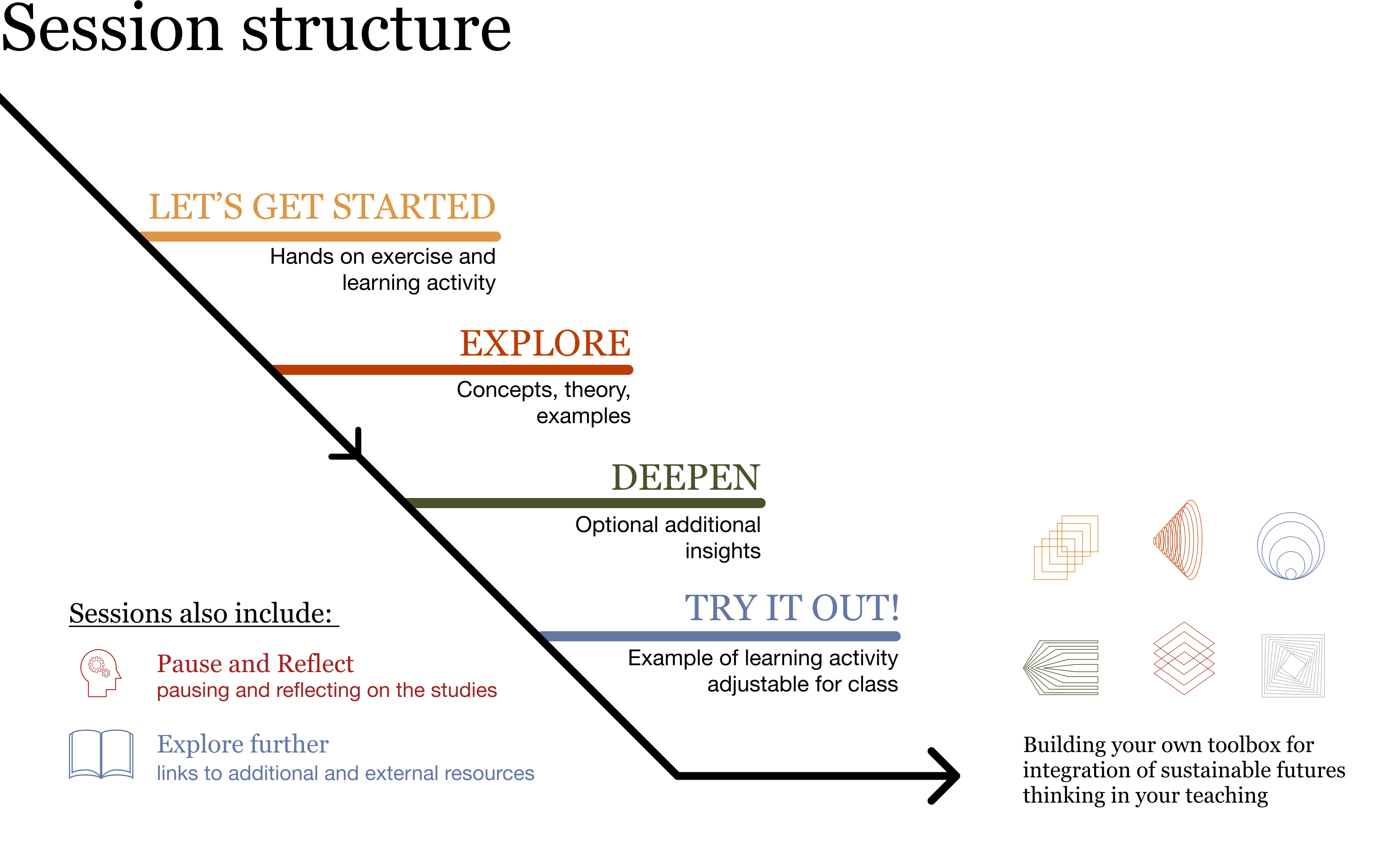
Each session includes a starter exercise (Let’s get started!), an exploration of the theme (Explore), reflection prompts (Pause and reflect), and an example learning activity (Try it out!) to inspire the development of teaching and the creation of tailored versions.
- An optional deeper dive (Deepen) is provided for selected themes.
- External resources (Explore further) appear at the end of each session.
- The course concludes with a final assignment: design and share a learning activity. The submissions are added to a cumulative resource library of learning activities.
Pre-requisites
There are no prerequisites for enrolling in the course. Participants who are unfamiliar with fundamental concepts related to diversity, equity, and inclusion will be provided with external sources for preliminary understanding. No prior knowledge of futures studies is required.
Course materials
The course includes
- reading materials
- videos
- external resources links
Interactive learning activities
- peer discussions with colleagues at own institution (independent scheduling)
- Forthcoming editions (expected 2026): online discussions in small groups (facilitated by Principles for Responsible Management Education (PRME) members)
Mode of delivery
The course is an online, asynchronous, self-study course with suggested learning activities that participants can engage in with colleagues and peers in their own institutional settings. The course material is openly available, and institutions are encouraged to include their own customized interactive elements that support peer learning and exchange in the course execution. Institutions within the PRME Champions group that participated in creating the training aim to offer facilitation of such interactive features, e.g., in the form of online workshops and small-group discussions; however, this cannot be guaranteed. Information about these interactive sessions will be delivered via the PRME Secretariat and/or regional chapters.
Grading criteria and breakdown
This course is ungraded. Institutions may adapt and modify the content to suit their internal needs and develop their own courses based on this framework, where they can apply their own grading systems and methods for recognizing and acknowledging learning outcomes.
Course schedule
The course is designed for independent completion, allowing participants to progress at their own pace. It is estimated to require approximately 25 hours of work to complete the course.